

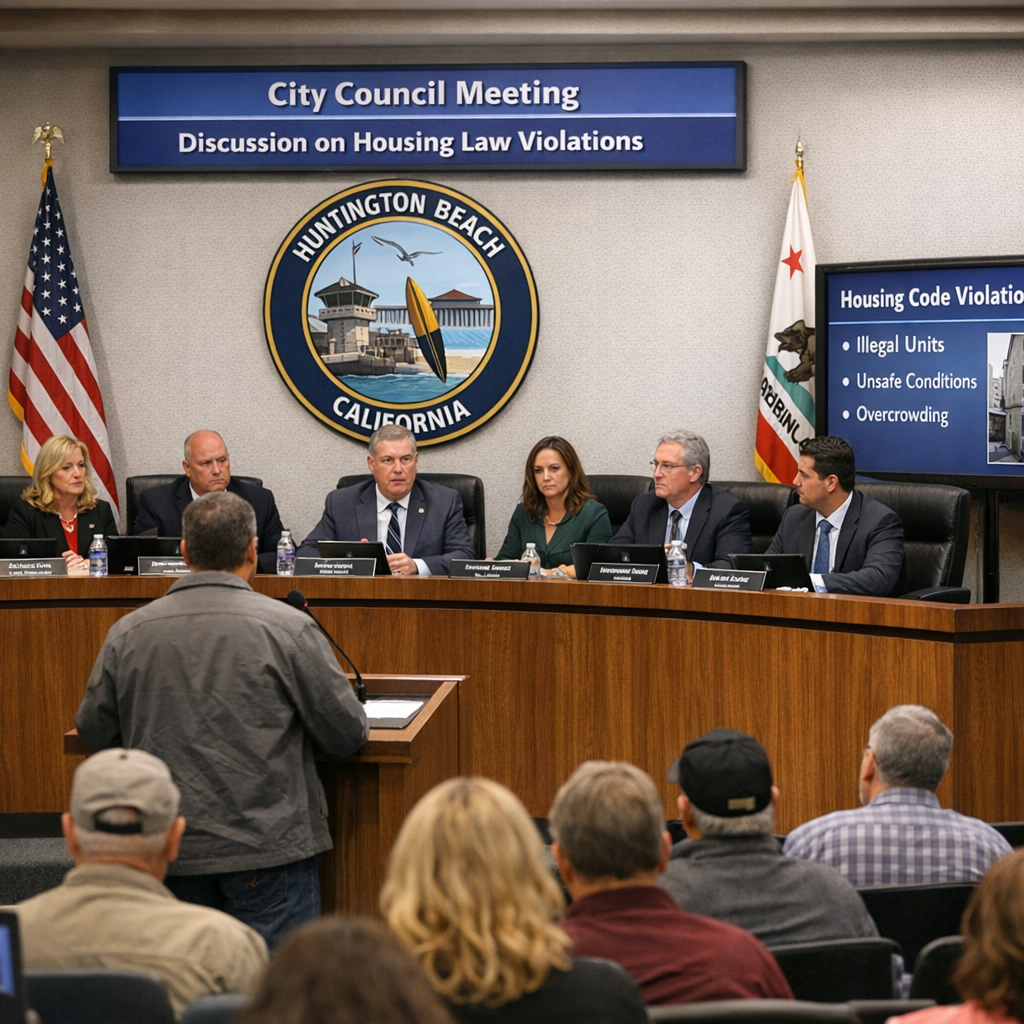
Huntington Beach is currently navigating a series of legal and community challenges stemming from its non-compliance with state housing laws and contentious local projects.
Legal Penalties for Housing Law Violations
In May 2026, a California Superior Court ordered Huntington Beach to pay $160,000 in penalties, with an additional $50,000 per month starting in June, due to the city’s failure to adhere to state housing mandates. This ruling follows a series of legal battles, including the U.S. Supreme Court’s decision in February 2026 to decline hearing the city’s appeal against state housing requirements. The city is now obligated to update its housing plan to accommodate its fair share of regional housing needs.
Community Disputes Over Infrastructure Projects
Residents are also expressing concerns over local infrastructure developments. In April 2026, more than two dozen homeowners filed a lawsuit against the Orange County Sanitation District. The dispute centers on a sewer easement project that encroaches approximately 30 feet into their properties, affecting structures like sheds, swimming pools, and even parts of homes. The sanitation district asserts that the easement, established in the 1960s, is essential for maintaining the regional wastewater pipeline.
City Council’s Response and Future Actions
The Huntington Beach City Council is under pressure to address these issues promptly. The council has initiated steps to comply with state housing laws and is engaging with affected residents to find equitable solutions to the infrastructure disputes. Community members are encouraged to participate in upcoming council meetings to voice their concerns and stay informed about developments.
As Huntington Beach confronts these multifaceted challenges, the city’s leadership and residents alike are seeking collaborative approaches to ensure compliance with state laws while preserving the community’s interests and well-being.